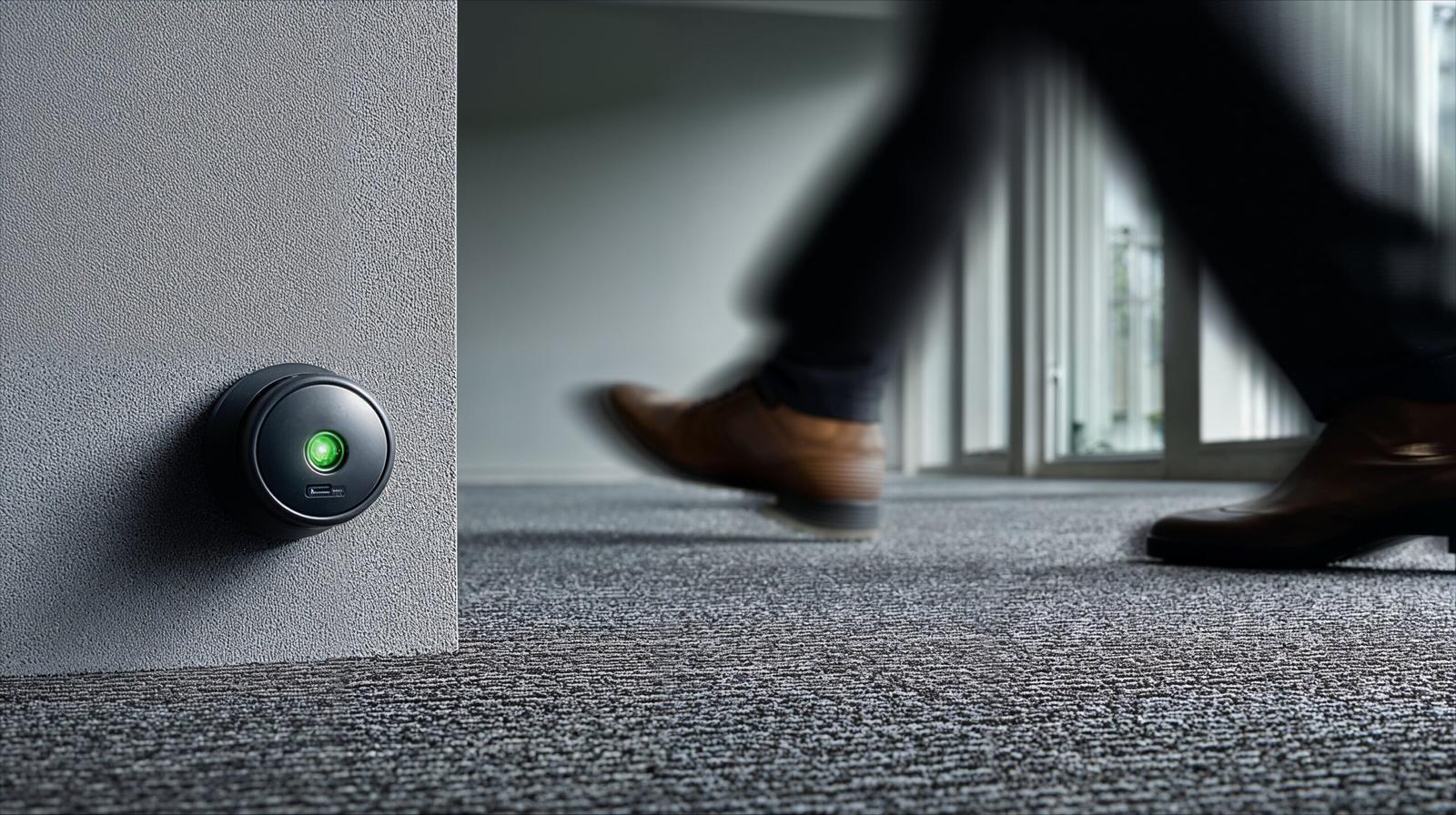
It's 7:45 AM and Sveinung is walking toward the main entrance at work. The app in his pocket automatically communicates with the office building, and the door opens before he reaches it. The lights in his office turn on when he passes the sensor in the hallway, and the climate control adjusts the temperature to his preferred 22 degrees.
In the elevator, he looks at his phone and sees that meeting room B is available at 10 AM, and books it with one tap. The canteen has already been notified that 127 people are coming for lunch today – not 95 like yesterday, or 156 like Monday. So they've prepared just the right amount of food.
When Sveinung leaves the building at 4:30 PM, the lights in his office automatically dim. Sensors register that there are no more people on his floor, and ventilation is reduced to minimum. The building "falls asleep" gradually as the last people leave.
This is proptech in practice – technology that makes everyday life smoother for Sveinung, saves money for the property owner, and reduces the building's environmental footprint.
Proptech in brief
What: Property Technology – technology meets real estate.
How: Sensors, apps, AI, and digital platforms.
Why: Save money, reduce environmental footprint, improve user experience.
Proptech combines real estate and technology. The term is used for all use of information technology in the real estate industry. It encompasses everything from digital tools for buying and selling property to smart solutions for operating commercial buildings. In practice, it often refers to startups and new business models that challenge the traditional real estate industry with innovative products.
Proptech can be seen as the real estate industry's answer to fintech (finance). It's a digital transformation where technology meets real estate to create more value for owners, managers, and users of commercial buildings. In other words, proptech covers all new digital tools being used to make real estate simpler, cheaper, safer, and more user-friendly.
Proptech has gone from niche to mainstream in real estate in recent years. Globally, the proptech sector is growing strongly. The sector was valued at around $35-40 billion in 2024 and is expected to triple to over $100 billion by 2032. Despite a general decline in venture capital, $42 billion found its way to proptech investments in 2023.
Artificial intelligence (AI) and the Internet of Things (IoT) are driving much of this growth. These technologies enable everything from predictive maintenance and personalized indoor climate to smart energy management and automated operations. A full 70% of proptech investments now have an AI element, and 3 out of 4 new commercial buildings come equipped with IoT sensors.
In the Nordics, and especially Norway, we see a strong emphasis on sustainability and user experience. Proptech solutions here focus often on green technology, energy savings, and creating good experiences for tenants.
Daniel Butenschøn at Proptech Norway points out that Norwegian and Nordic proptech maintains high quality and competes internationally; despite less funding, the innovation level is high. A good example is that several Norwegian startups have won prizes at the Nordic PropTech Awards.
Proptech encompasses a range of technologies, but some stand out as particularly central:
Smart sensors connected to the internet make buildings "digital" by collecting data on everything from temperature, air quality, and energy consumption to movement and access. This data is then used to control buildings automatically.
AI is at the core of many proptech solutions. Using machine learning, systems can analyze large amounts of data from sensors and equipment, find patterns, and make predictions.
Another important innovation in proptech is the emergence of digital platforms that connect people and services in buildings. These function as the central platform in a building – a place where you can book meeting rooms, report service needs, get news from the property owner, manage visitor access, and much more, all in one solution.
Sustainability runs like a red thread through modern proptech. Buildings account for a significant share of energy consumption and emissions, so technology is aimed at making buildings greener.
Read more about Proptech next week in Part 2.
Send us an inquiry through the form!